
What Trump’s Oil Agreement Means for Growth, Stability, and Global Markets
In a major shift in U.S.–Venezuela relations, former U.S. President Donald Trump announced a new oil agreement with Venezuela, under which Caracas will deliver between 30 and 50 million barrels of sanctioned crude oil to the United States — a deal valued at roughly $2.8 billion at current market prices.
This unprecedented arrangement — emerging amid political turmoil following the capture of Venezuelan President Nicolás Maduro — promises to reshape the future of Venezuela’s economy, its position in the global oil market, and the regional geopolitical landscape.
What the Trump–Venezuela Oil Deal Entails
According to Trump’s announcement, Venezuela’s interim authorities have agreed to transfer 30–50 million barrels of oil to U.S. buyers, with the proceeds controlled by the U.S. government and earmarked to benefit both Venezuelans and Americans.
The plan — supervised by the U.S. Department of Energy — involves transporting crude via storage tankers directly to U.S. ports. Trump asserted he will oversee revenue distribution to ensure funds are used “in benefit of the Venezuelan people and the United States.”
This marks a dramatic departure from the sanctions-heavy policy the U.S. has maintained toward Venezuela’s oil sector for years, highlighting an evolving strategy to leverage Venezuela’s vast energy resources for strategic and economic purposes.
Venezuela’s Oil Sector: A Broken Giant With Massive Potential
Despite possessing the largest proven crude oil reserves in the world, Venezuela’s oil industry has been in steep decline for over a decade. Years of underinvestment, corruption, mismanagement, and prior sanctions have reduced daily production to roughly 1 million barrels per day — well below its historical peak of over 3 million barrels per day.
The country’s heavy, extra-viscous crude requires specialized technology and diluents to extract and refine — factors that have deterred foreign investment and limited production capacity. Analysts estimate billions in capital investment would be necessary to restore Venezuelan oil output to significant levels.
Short-Term Economic Impacts
Revenue Injection into the Venezuelan Economy
The immediate effect of the oil transfers would be an influx of foreign currency from the sale of crude oil at market prices, a crucial development for an economy that has suffered from hyperinflation, currency instability, and dwindling export revenue.
However, the scale — 30–50 million barrels — represents only a fraction of a full year’s production, roughly equivalent to one to two months of output under current conditions. This means the short-term boost, while significant, is unlikely to single-handedly stabilize the economy.
Oil Market Effects
The announcement sparked reactions in global oil markets, with crude prices declining as markets priced in increased supply. Analysts note that an additional supply of tens of millions of barrels could exert downward pressure on Brent and WTI benchmarks, especially amid global oversupply concerns.
While beneficial for oil-consuming economies, lower prices could blunt the potential revenue gains for Venezuela unless paired with higher production volumes in the future.
Geopolitical Shifts in Oil Trade
Venezuela previously sold much of its crude to China and other international partners. Redirecting oil exports toward the U.S. market could strain existing contracts and realign trade flows — but it may also create pressure on China to seek alternative suppliers.
Medium-Term Prospects: Investment and Oil Industry Revival
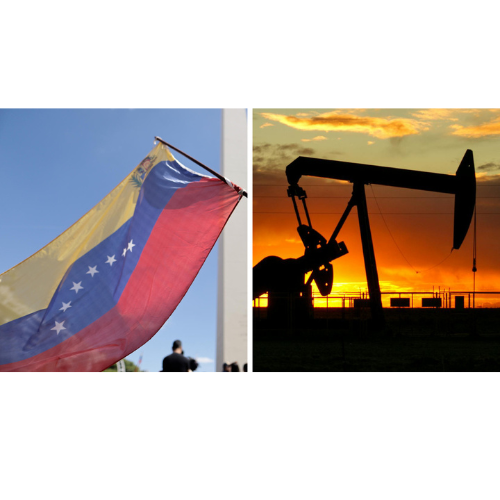
To realize sustainable economic growth, Venezuela must revive its oil industry. Trump’s statements on inviting U.S. oil companies to invest in Venezuela signal a potential shift toward long-term energy partnerships.
Attracting Foreign Investment
Major U.S. and global oil firms — including Chevron, ExxonMobil, and ConocoPhillips — have historically operated in Venezuela but largely withdrew amid hostile conditions and nationalizations. Trump’s administration has hinted that oil companies could be compensated or incentivized to return.
However, skepticism remains high in the industry. Analysts point to the poor state of infrastructure, lingering legal uncertainty, and political instability as major obstacles to large-scale investment.
Upgrading Infrastructure
Restoring Venezuela’s oil infrastructure — pipelines, refineries, and extraction sites — would require massive capital expenditures. Current estimates suggest several dozens of billions of dollars over years of sustained investment before output could approach historical levels.
If foreign capital arrives and political stability increases, Venezuela could gradually boost production capacity and reclaim a meaningful share of global oil exports.
A New Chapter With Cautious Optimism
Trump’s oil agreement with Venezuela represents a momentous development with potential to deliver short-term revenue and set the stage for broader economic recovery. The future of Venezuela’s economy now hinges on how this initial deal evolves — whether it leads to sustained investment, oil industry revitalization, and structural reforms — or falls short due to entrenched political and economic obstacles.
As Venezuela stands at this pivotal crossroads, the world will be watching to see if this energy-rich nation can leverage its natural resources to break free from decades of decline and chart a path toward lasting economic growth.